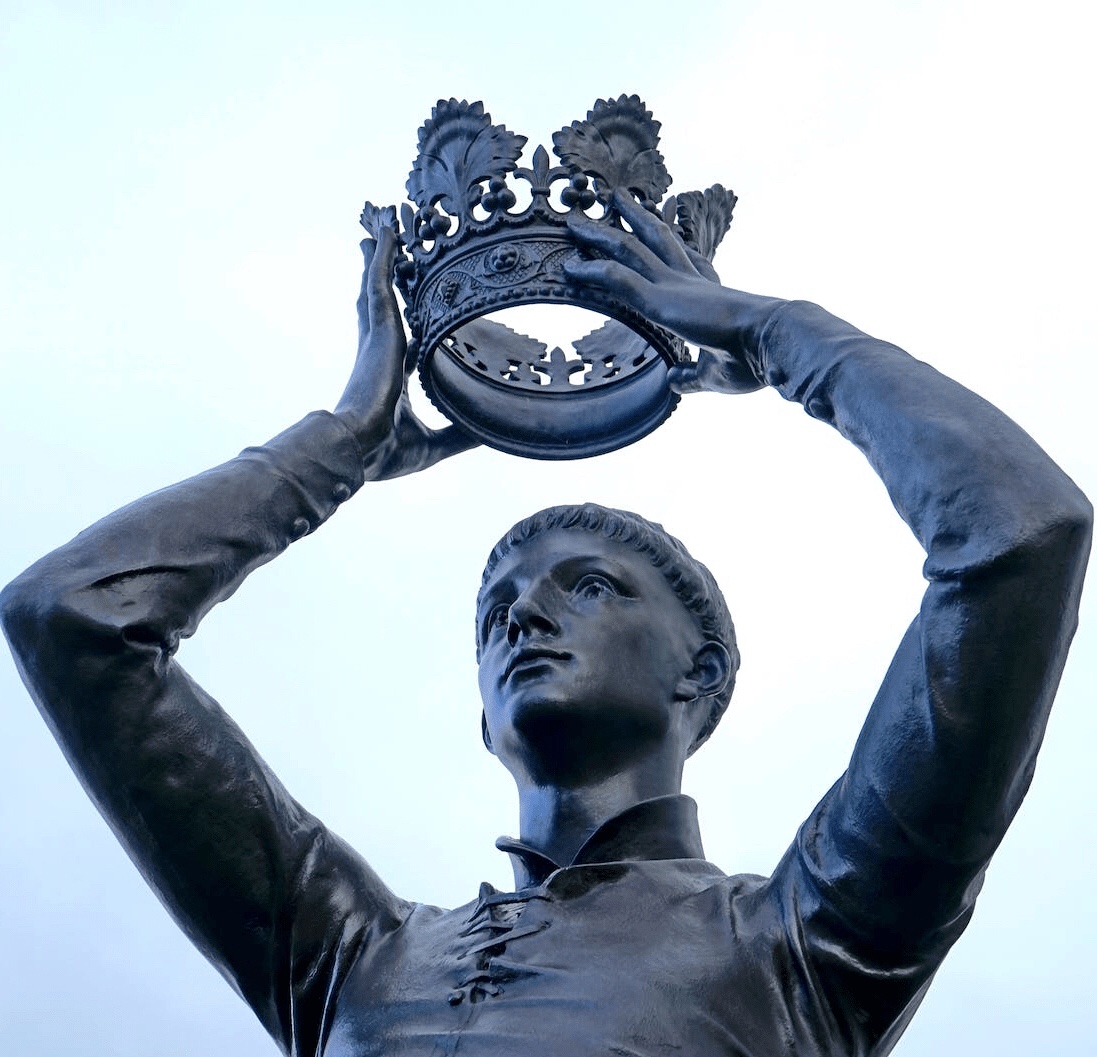
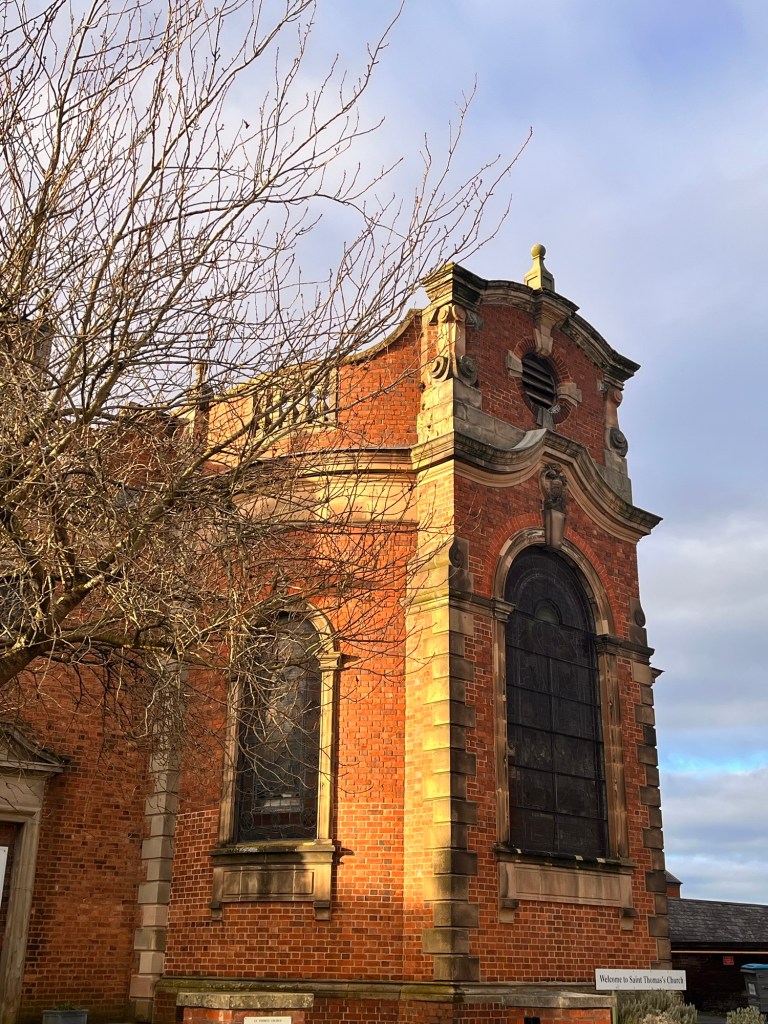
In a narrow back street of old Stourbridge Town lies the redbrick Georgian church of St Thomas’s, described in 1832 by local historian William Scott as, “a handsome brick building, commodiously fitted up.”
The church had been built over the period of 1728- 1736 in a project led by the governors of Stourbridge Grammar School – the school where Samuel Johnson had once been a pupil.

In the eighteenth century, Stourbridge, then in Northern Worcestershire, was growing in status, size and prosperity with skilled glassmaking at its heart.
A local clothier had started the project by leaving a bequest for the building of a town church, now needed to solve the problems incurred by over-crowding at St Mary’s, Oldswinford , the mother parish church of Stourbridge at that time. Many townspeople came forward to support the fundraising including from the established and well known local families – the Foleys, the Lytteltons of Hagley Hall and Lord Dudley himself.
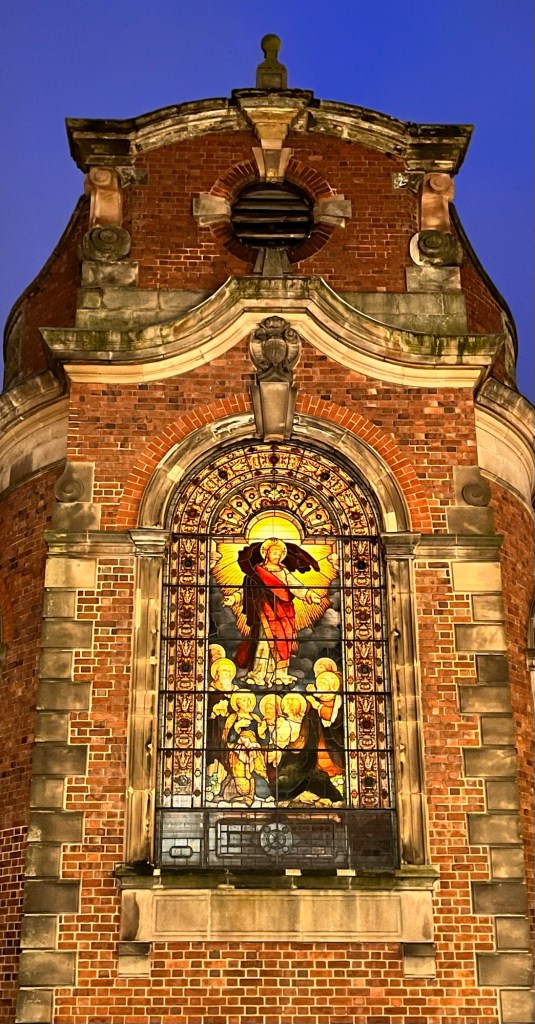
The style of architecture of the church is unusual for the area – built in simple crucifix form with no stained glass or tower initially. The architect was thought to be William Westley though some mystery remains.
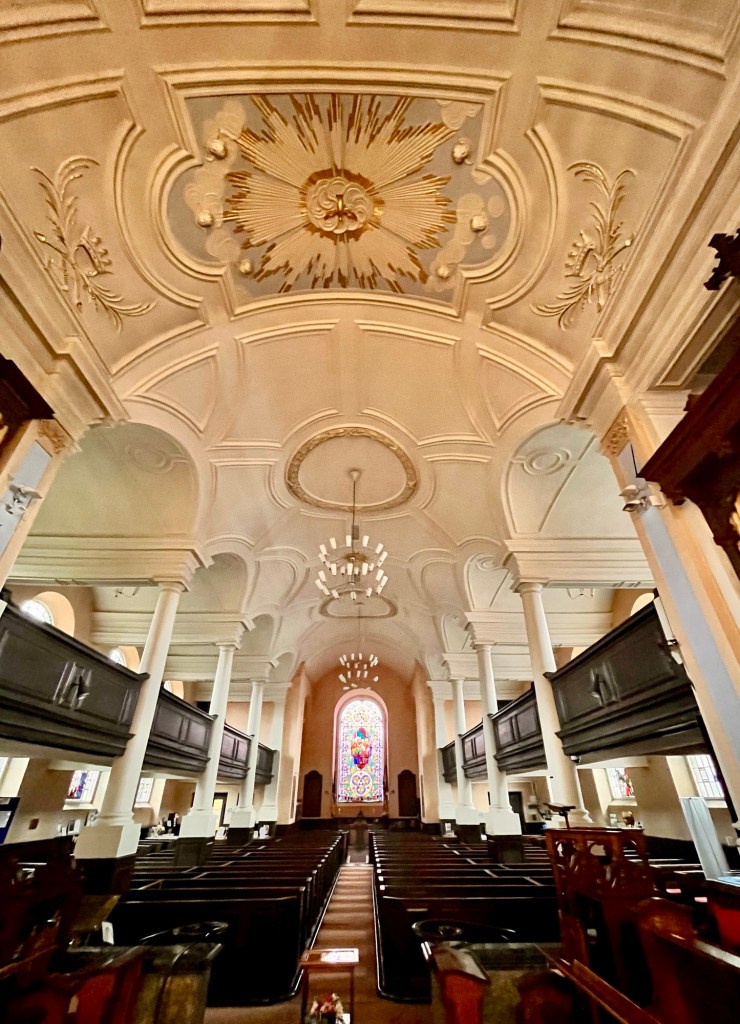
The interior is marked with grand tall white wooden columns and has an unusual ceiling described in Historic England’s listing as a, “richly panelled barrel vault,” a feature which helped to granted the church its highest heritage rating. The revised Pevsner guide describes the interior as having similarities to, “Wren’s system at St James, Piccadilly,” regretting that the church had not been more prominently placed in the town.
However, controversy associated with the newly built church began almost immediately following its construction.
Who would be the vicar of the new town church?
The townspeople who had paid for the church felt strongly that they had the right of selection. The Rector of Oldswinford and the Bishop of Worcester begged to disagree – as they would argue, this was very much their patch. They wanted to install their choice of priest paid for by the renting of the pews to parishioners. The trustees of the new church were not amused at not only the suggestion of paid pews when the parish already had an income but also the fact that they had already lined up a local clergyman to take the role. Their own choice.
Arguments rumbled on, even leading to a petition and counter petitions being submitted to Parliament as warring factions argued about control of the church and how it should be able to raise an income, potentially from gaining rights to of some of Stourbridge’s common land – a deeply unpopular suggestion as it was used for sheep grazing, geese and horse rearing by locals. The locals won out and peace was restored- though this was to be a temporary ceasefire.
Over the years, the selection of the Reverend was to cause ongoing strife, threats of closure and counter-threats. This culminated in the rather bizarre incidents of 1858, where nine candidates put themselves forward for the role of Reverend following the retirement of Rev Giffard Wells. Each candidate was asked to deliver a trial sermon in front of the congregation that reduced the number to five – a sermon competition no less.
The pewholders of the Church were then asked to make an appointment which they did, but the five candidates refused to recognise the result and a public meeting was held to discuss the contest.
The meeting was reported to have been extremely fractious, with each prospective candidate having his own supporters. The election that followed led to fighting in the streets of the town – even more shocking as one skirmish took place between a respected local Doctor and a Lawyer, even making it into the pages of the Worcester Chronicle.
The local paper describing how the altercation began with, “each calling the other a liar and then name calling, a knocking off of hats and finally to fist fighting, to no small delight of a crowd who had by this time assembled. At length the two professionals were parted, without either of them having obtained satisfaction.”
Eventually, Rev Hugh Sherrard was elected as last man standing. He was to hold onto the position until 1908.
Settled times were to follow and St Thomas’s was finally consecrated in 1865, becoming its own parish church. It had taken 130 years to achieve independence.
Further Reading
Saint Thomas’s Church, Stourbridge – A Journey Through Time : Wendy Gwynne
King Edward VI. The Story of a School : RL Chambers
The Buildings of England – Worcestershire : Nikolaus Pevsner
The Buildings of England – Birmingham and the Black Country : Andy Foster, Nikolaus Pevsner, Alexandra Wedgwood
 Tales from the Halfshire Hundred